I watched 'Cathy Come Home' on UK television yesterday (Sunday 26 November 2006) evening. On each occasion, including the first, I have watched Ken Loach's 'Wednesday Play' several times over the past 30 years I have felt a great reluctance to put myself through the unswerving inevitability (listen to Ravel's 'Bolero', or read the description by Simone de Beauvoir of Jean-Paul Sartre and herself watching US 'western' movies) and the mounting agony of the simple plot. On each occasion, however, I am enticed and drawn into the movie by Loach's unsentimental, unsensationalised docudrama treatment (contrast with the recent BBC 'Horizon' docudrama on pandemic 'flu).
Loach's characters are Everyman and his Wife, who we are not invited to love, interacting with characterisations of people employed to run 'the system', who we are not invited to despise. Both the subject matter and the acting seem to belong to unexceptional BBC television drama/soap. However, the camera-work and editing are much less languid than a contemporary soap such as Coronation Street. I love the devices of having the voice of Cathy looking back to provide a commentary; and of providing factual information about homelessness in various parts of the UK (as Manuel Pueg does about homosexuality in his novel 'Kiss of the Spiderwoman', and John Fowles does about prostitution in Victorian London in 'The French Lieutenant's Woman').
The movie rehearses a range of myths about the apparent fecklessness of people who become homeless, unostentatiously exposing the patent fallacy of such myths. The movie shows how easily (and even arbitrarily) people can be knocked out of society into an effectively disenfranchised underclass. The movie shows how a couple of ordinary people, with ordinary aspirations, can be driven to shout at (i.e. to behave impolitely towards) officials of 'the system' who fail to hear (won't or can't?) the increasingly desperate plight of Cathy and her family. On several occasions during the movie (such as at the meeting of the householders who live near the caravan site, and the subsequent arson attack on the caravans; and when the baliff comes to evict them from the squat), the hypocrisy of the characters is suggested, although the scene is never devoid of sympathy for them.
... to be continued ...
27 November 2006


20 November 2006
Infanticide (de facto)
Guidance recently issued to hospital paediatric units by the BMA (British Medical Association) upset me. It is proposed that UK babies born at 22 weeks or earlier should not be resuscitated because their chances of survival are only one per cent, and the likelihood of a surviving child being disabled is high.
Had I only a one per cent chance of living, I would take it without hesitation. I find it hard to believe that few people would say differently. If my daughter had a one per cent chance of survival, I would do all in my power to provide her with that chance.
It would appear obvious, therefore, that the issue for the BMA is not about the chances of survival but that the cost of intensive neonatal medical care is considered too high to make the expense worthwhile. I accept that there are prices that may not be worth paying for a human life, or even the chance of a human life: the sacrificial death of other people; a Chernobyl-scale environmental disaster; or the destruction of a national art gallery or national cultural / world heritage site. However, people, companies and governments the world over spend millions of pounds, euros, dollars and yen on armaments, on base entertainment and on conspicuous consumption. Whilst it would be fair to argue over the merits or otherwise of goods and services bought and sold the world over, a medical policy of refusing to save the life of a prematurely-born child in order to economise on resources seems to be turning medical ethics upside down.
I do not believe that whether a child is likely to be born disabled should be a consideration regarding whether to save the child's life. If the issue is about cost, the financial expense of caring for that child through life would be a drop in the ocean compared to building and launching a military satellite, making a blockbuster movie, or a constructing a cruise liner. However, maybe there is an implicit belief that the life of a disabled child is a life blighted. ("The child would be sensorily impaired, be in constant pain, and have a poor quality of life. We'd be doing it a favour, putting it out of its misery. Were it a dog we'd have little hesitation about putting it down.") It would be interesting to find out the differential suicide rates for disabled and able-bodied people: I doubt that there is much difference (I am ready to be corrected). Maybe the BMA's concern is for the inconvenience to blameless parents of being saddled with a child requiring medication several times each day; additional attention to needs; specialist care, equipment and schooling.
I have a strong belief that societies the world over are better, richer, more humane societies because of the engagement required of them to care for children and young people, older people, people with a learning disability, physically disabled people, people whose health is frail, emotionally vulnerable people, people who live on the edge. Societies that most of all prize and reward strength and excellence, and strive towards conceptual ideals and ideas of perfection, risk losing touch with warm humanity. It seems to me that the UK is already quite some way along that cold path.
I recognise that for many people the term 'family' is problematic, perhaps because of abuses that have taken place within their family. However, I like the term when used more broadly to refer to a group of people who struggle together to make life work. To quote from Lilo and Stich: "Family means no-one gets left behind." For me, that means no-one.
Had I only a one per cent chance of living, I would take it without hesitation. I find it hard to believe that few people would say differently. If my daughter had a one per cent chance of survival, I would do all in my power to provide her with that chance.
It would appear obvious, therefore, that the issue for the BMA is not about the chances of survival but that the cost of intensive neonatal medical care is considered too high to make the expense worthwhile. I accept that there are prices that may not be worth paying for a human life, or even the chance of a human life: the sacrificial death of other people; a Chernobyl-scale environmental disaster; or the destruction of a national art gallery or national cultural / world heritage site. However, people, companies and governments the world over spend millions of pounds, euros, dollars and yen on armaments, on base entertainment and on conspicuous consumption. Whilst it would be fair to argue over the merits or otherwise of goods and services bought and sold the world over, a medical policy of refusing to save the life of a prematurely-born child in order to economise on resources seems to be turning medical ethics upside down.
I do not believe that whether a child is likely to be born disabled should be a consideration regarding whether to save the child's life. If the issue is about cost, the financial expense of caring for that child through life would be a drop in the ocean compared to building and launching a military satellite, making a blockbuster movie, or a constructing a cruise liner. However, maybe there is an implicit belief that the life of a disabled child is a life blighted. ("The child would be sensorily impaired, be in constant pain, and have a poor quality of life. We'd be doing it a favour, putting it out of its misery. Were it a dog we'd have little hesitation about putting it down.") It would be interesting to find out the differential suicide rates for disabled and able-bodied people: I doubt that there is much difference (I am ready to be corrected). Maybe the BMA's concern is for the inconvenience to blameless parents of being saddled with a child requiring medication several times each day; additional attention to needs; specialist care, equipment and schooling.
I have a strong belief that societies the world over are better, richer, more humane societies because of the engagement required of them to care for children and young people, older people, people with a learning disability, physically disabled people, people whose health is frail, emotionally vulnerable people, people who live on the edge. Societies that most of all prize and reward strength and excellence, and strive towards conceptual ideals and ideas of perfection, risk losing touch with warm humanity. It seems to me that the UK is already quite some way along that cold path.
I recognise that for many people the term 'family' is problematic, perhaps because of abuses that have taken place within their family. However, I like the term when used more broadly to refer to a group of people who struggle together to make life work. To quote from Lilo and Stich: "Family means no-one gets left behind." For me, that means no-one.
06 November 2006
Killing Saddam Hussein
I permit no-one to take life in my name, for killing is wrong. Whether perpetrated by tyrants or democratically-elected governments, killing is wrong. Regardless of purpose, motivation or mitigation, killing is wrong. Whether executed as a crime in passion, in time of war, or judicially in cold blood, killing is always wrong.
22 August 2006
Some cities in the US
Mahattan is the capital city of high culture; the most vibrant of cities in which to shop, eat and be entertained; and simply the centre of the world. The terrorist attack of 11 September 2001 prompted me to visit - four times to date. Were a year's job-swap ever possible, I should find it impossible to resist. In the meantime my next visit is being plotted.
DC, with its Smithsonians, its grand architecture, and the charming politeness of many of the people who live there, make it a worthy tourist city. Its pleasant weather, reasonably accessible public transport system, and several vegetarian eating places (all of which had vegan dishes) made the four days I spent there all too brief, and I should have preferred to have spent four weeks. DC is high on my list of cities to revisit.
Boston, on the other hand, is significantly over-rated as a tourist destination, and is worth avoiding until even Washington (Tyne & Wear, UK), Peterlee (County Durham, UK) and Harlow (Essex, UK) have been exhausted. Whereas it likes to trade under the name of 'Beantown', Boston's historical sites are few, poorly presented, and offensively partisan. Many of the people who inhabit central Boston behave coldly at best, some might say rudely. There is virtually no vegan food to be had anywhere near central Boston. On the other hand, Cambridge was pleasant in a very, very low key way, but nothing to Oxford (UK), Cambridge (UK) or ever Dublin (Eire).
Chicago has wonderful architecture stretching back to the nineteenth century. As well as the grand buildings, such as the Institute of Art, and the fascinating 1920s' skyscrapers (such as the Union Carbide building), and the imposing late twentieth century skyscrapers (such as the Sears Tower), Frank Lloyd Wright left his mark, several in fact, at Oak Park - essential viewing for anyone interested in architecture. A boat trip is an excellent way to view the architecture of downtown Chicago. The Instiute of Art, so lovingly featured in John Hughes' movie Ferris Bueller's Day Off, is world class, and is essential viewing. Several recent movies use the ambience of Chicago as though a chartacter: Fugitive, starring Harrison Ford, and While You Were Sleeping, starring Sandra Bullock. The public zoo is set in parkland on the lakeshore. There is vegetarian food in Chicago, including in the gay, bohemian suburb of North Halstead.
To be continued ...
DC, with its Smithsonians, its grand architecture, and the charming politeness of many of the people who live there, make it a worthy tourist city. Its pleasant weather, reasonably accessible public transport system, and several vegetarian eating places (all of which had vegan dishes) made the four days I spent there all too brief, and I should have preferred to have spent four weeks. DC is high on my list of cities to revisit.
Boston, on the other hand, is significantly over-rated as a tourist destination, and is worth avoiding until even Washington (Tyne & Wear, UK), Peterlee (County Durham, UK) and Harlow (Essex, UK) have been exhausted. Whereas it likes to trade under the name of 'Beantown', Boston's historical sites are few, poorly presented, and offensively partisan. Many of the people who inhabit central Boston behave coldly at best, some might say rudely. There is virtually no vegan food to be had anywhere near central Boston. On the other hand, Cambridge was pleasant in a very, very low key way, but nothing to Oxford (UK), Cambridge (UK) or ever Dublin (Eire).
Chicago has wonderful architecture stretching back to the nineteenth century. As well as the grand buildings, such as the Institute of Art, and the fascinating 1920s' skyscrapers (such as the Union Carbide building), and the imposing late twentieth century skyscrapers (such as the Sears Tower), Frank Lloyd Wright left his mark, several in fact, at Oak Park - essential viewing for anyone interested in architecture. A boat trip is an excellent way to view the architecture of downtown Chicago. The Instiute of Art, so lovingly featured in John Hughes' movie Ferris Bueller's Day Off, is world class, and is essential viewing. Several recent movies use the ambience of Chicago as though a chartacter: Fugitive, starring Harrison Ford, and While You Were Sleeping, starring Sandra Bullock. The public zoo is set in parkland on the lakeshore. There is vegetarian food in Chicago, including in the gay, bohemian suburb of North Halstead.
To be continued ...
27 May 2006
The media mainstreaming of the language of the BNP
The political agenda of the UK appears no longer to be driven by elected representatives, but is being determined by the reationary politics promoted by News International (News Corporation) and the commercial imperative of the purveyors of what the news media chose to define as news. It used to be the case that although the national newspapers were politically partisan, political action took place in the political arena: Westminster, the soapbox and demonstrations. In May 1997 the news media wrested from the UK Consertvative Party the mantle of quasi-formal opposition to the newly-elected Blair government. I am unsure about precisely when the Blair government lost control of the agenda, possibly in the run-up to the most recent (5 May 2005) general election. Maybe control of the political agenda has been ebbing away from Westminster over a period of years. This current period reminds me of the time between Tony Blair's election to leadership of the UK Labour Party (21 July 1994) and his defeat of Conservative John Major (2 May 1997), except that it is now Rupert Murdoch for whom we are waiting to move into 10 Downing Street.
Current so-called revelations about the UK Home Office appear largely driven by an agenda of xenophobia. The rehtoric focuses on the deportation of foreign nationals, 'bogus' asylum seekers, 'economic' migrants, refugees and people trafficking. For reasons I find it difficult to understand many people in Britain have become addicted to this unpleasant, bunker propaganda that should be the sole preserve of Nick Griffin's British National Party, the Front National of Jean-Marie Le Pen, and paranoic, white-supremicist, North American redneck militias. (The one difference is that the UK media appear to be anti-Arab rather than anti-Jewish.)
The phrase that prompts my wry smile is "this island nation of ours". The UK is neither the most densely populated country in the world, nor the most densely populated country in Europe. The UK ranks 33 in the world league table, next to Germany, whereas the Netherlands (15) and Belgium (17) have considerably higher population densities. I am unfamiliar with people complaining about living in Jersey, Guernsey or Barbados: real islands with much higher population densities; and even London ranks well down the list in the world and in Europe.
I am not claiming that what is being stated in the headlines is necessarily factually inaccurate, but that it is being given a maliciously-twisted relevance.
... to be continued ...
However, vox pop suggests that not only is the UK population buying into this de facto deceit, but also appear immune to the facts and their significance. To illustrate this point, regarding law and order, to anyone in the UK it is self-evident both that there are fewer police officers and that crime is all but out of control - whereas despite better recording, recorded crime has been on the decline for the past 15 or more years, and there are more police officers, as well as civilians working for the police, than ever before. Regarding health, the UK public focuses on the fact there are one-third fewer hospital beds than at some point in the past, rather than the relevant facts that life expectancy has risen so much that there is a major crisis in pension savings; or that the rate at which new drugs to address this or that illness or condition are being introduced appears to be accelerating; or, perhaps most significantly, that medical procedures have advanced sufficiently that the need for lengthy stays in hospital has thankfully been signifiantly reduced. Regarding tobacco smoking, the UK public demand a right to damage the health of allcomers (smokers and non-smokers alike), whingeing plaintively about hospitals that ban smoking, and confetti-ing with cigartette butts the entrance to public buildings, when all the evidence for decades has unequivocally, adequately and graphically illustrated that smoking should be stopped immediately; as well as buying from the informal economy significant quantities of cigarettes on which no duty has been paid (are these the same people who buy newspapers that peddle myths about crime being out of control?).
... to be continued ...
Current so-called revelations about the UK Home Office appear largely driven by an agenda of xenophobia. The rehtoric focuses on the deportation of foreign nationals, 'bogus' asylum seekers, 'economic' migrants, refugees and people trafficking. For reasons I find it difficult to understand many people in Britain have become addicted to this unpleasant, bunker propaganda that should be the sole preserve of Nick Griffin's British National Party, the Front National of Jean-Marie Le Pen, and paranoic, white-supremicist, North American redneck militias. (The one difference is that the UK media appear to be anti-Arab rather than anti-Jewish.)
The phrase that prompts my wry smile is "this island nation of ours". The UK is neither the most densely populated country in the world, nor the most densely populated country in Europe. The UK ranks 33 in the world league table, next to Germany, whereas the Netherlands (15) and Belgium (17) have considerably higher population densities. I am unfamiliar with people complaining about living in Jersey, Guernsey or Barbados: real islands with much higher population densities; and even London ranks well down the list in the world and in Europe.
I am not claiming that what is being stated in the headlines is necessarily factually inaccurate, but that it is being given a maliciously-twisted relevance.
... to be continued ...
However, vox pop suggests that not only is the UK population buying into this de facto deceit, but also appear immune to the facts and their significance. To illustrate this point, regarding law and order, to anyone in the UK it is self-evident both that there are fewer police officers and that crime is all but out of control - whereas despite better recording, recorded crime has been on the decline for the past 15 or more years, and there are more police officers, as well as civilians working for the police, than ever before. Regarding health, the UK public focuses on the fact there are one-third fewer hospital beds than at some point in the past, rather than the relevant facts that life expectancy has risen so much that there is a major crisis in pension savings; or that the rate at which new drugs to address this or that illness or condition are being introduced appears to be accelerating; or, perhaps most significantly, that medical procedures have advanced sufficiently that the need for lengthy stays in hospital has thankfully been signifiantly reduced. Regarding tobacco smoking, the UK public demand a right to damage the health of allcomers (smokers and non-smokers alike), whingeing plaintively about hospitals that ban smoking, and confetti-ing with cigartette butts the entrance to public buildings, when all the evidence for decades has unequivocally, adequately and graphically illustrated that smoking should be stopped immediately; as well as buying from the informal economy significant quantities of cigarettes on which no duty has been paid (are these the same people who buy newspapers that peddle myths about crime being out of control?).
... to be continued ...
05 May 2006
Satisfaction: pleasure versus fulfilment
In pursuing thoughts about happiness from an earlier
posting, I got to thinking that I am seeking to earn myself a sense of
satisfaction by means of pleasure. I feel satisfied when I experience the pleasure
of listening to Vivaldi ('Four Seasons), Sandy Denny ('Who Knows Where the Time
Goes?' or Van Morrison ('Madame George'). I feel satisfied when I experience
the pleasure of watching Spirited Away, Amelie or Koyaanisqatsi.
I feel satisfied when I experience the pleasure of a well-prepared Indian, Thai
or Chinese meal. I feel satisfied when I when I experience the pleasure of Monet's
water lilies, Van Gogh's Provençal
scenes, or Pollock's swirling rhythms. And what if I spent my life engaged only
in consuming? As vital as each source of pleasure is to me (other than in
matters of taste and preference, little different from football and soaps), and
I should dearly love to have more of every source of pleasure-induced
satisfaction in my life, something would be missing.
I have spent a significant part of my life volunteering, and
I continue to volunteer in one respect or another. The paid work that I now do
is about helping people, which makes my work much more satisfying to me than
were people not helped as a result. It is important to me that my work (whether
voluntary or paid) is meaningful in some way, so that while I am engaged in it,
and also when I have completed a task, I enjoy a sense of fulfilment, and
consequently satisfaction. Visiting cities overseas can be remarkably hard
work, due to my travel sickness, difficulties in locating vegan-suitable food,
and ensuring adequate wheelchair access to museums (I telephoned the Musée Marmottan
in Paris, and was assured that access was no problem as there is a stair-lift
at the entrance, but when we arrived the stair-lift was not only out of order,
but looked as though it had been out of order for a long time), to hotels (I
have discovered that the doors to most bedrooms in Holiday Inn hotels are too
narrow to admit a wheelchair) and onto public transport (on each
wheelchair-accessible bus for La Guardia that arrived over a 90 minute period
the wheelchair lift was non-functional, generating considerable anxiety that we
might miss our flight to DC). Perhaps because of having to overcome such
difficulties, I can achieve a considerable sense of fulfilment, as well as
pleasure, from visiting cities such as Paris, Berlin and Venice, New York, Washington
and Vancouver, contributing to my overall sense of satisfaction with the
experience. Constructing my website, or developing my photographic skills, or
improving my ability to communicate in some other language, is often demanding
in one way or another, and consequently offers the satisfaction of fulfilment,
especially on those occasions when the discipline involved fails to generate
pleasure in the experience.
In conclusion, I guess that I am motivated to achieve an
only-occasionally fully-satisfied sense of satisfaction (who else but the
Rolling Stones?), in part through pleasure, and in part through fulfilment,
neither of which alone is sufficient, but in combination and balance can offer
considerable satisfaction for a while.
04 May 2006
Happiness and satisfaction
I read, today, on the BBC news website, that happiness is in decline in the UK. According to the report, compared with fifty years ago, significantly fewer people in the UK are very happy. Over the same time period, wealth in the UK has increased three-fold. A question was implied: being so much better off now, why are people in the UK less happy? A second, more explicit, question was asked: should government focus either on creating happiness or on creating wealth?
I feel uncertain about several points: what is happiness? is happiness made up from component parts, such as contentment, satisfaction and joy? does happiness exist other than as a generalised concept? how can blunt, ticky-box social surveys hope to understand the delicacy how each individual makes sense of their ever-changing human emotions? how can anyone imagine that it should be the business of government to attend to, and respond to, how people feel?
According to the BBC news website, it has long been recognised that it was many years ago that the US population ceased getting happier with increasing wealth. Whilst I understand what is intended by this statement, I also have many doubts about it. For example, apart from not knowing what happiness is, and what exactly was being measured, I have no knowledge of which social, demographic and geographical factors were correlated; nor of how much account was taken of wealth differentials (compared with wealth in the US and the UK, wealth in Scandanavia is more evenly distributed across the population). Were it the case that wealthy people get happier, poorer people become less happy, and wealth differentials have increased, then maybe there is nothing suprising to be discussed.
It has become a commonplace in the UK that winning millions of pounds (GBP) from the national lottery is more likely to result in a reduction in happiness. Yet the hope and belief of many people is that to become wealthy, or at least significantly wealthier, is sufficiently desirable that, for every child, woman and man in the UK, 75 GBP each year is handed over to Camelot (the company that runs the UK lottery). Accordingly to a Camelot press release from March 2005, weekly takings are between GBP 85,000,000 and GBP 90,000,000.
What is not a commonplace is that, over the past fifty years, the expectations of people in the UK have skyrocketed. Most people in the UK expect to be able to travel with ease at speed around the UK, probably in our own car; many people expect to be able to travel cheaply by air to tourist destinations throughout western Europe; it has become imaginable and feasible for many people to travel around the world. By contrast, the UK of Brief Encounter, shows a very different world. Regarding food, entertainment and recreation, expectations have changed out of all recognition. Regarding health, we have come to expect specialised medication (regardless of how expensive) as our right, and have become impatient for new techniques and cures. Regarding technology, we are so sophisticated that a cellphone without texting capability, a television incapable of receiving digital pictures, a laptop computer without wi-fi, would feel like a medieval throw-back. Regarding communication, we expect to be able to sit on a beach in Margate, Marbella or Miami, and call home, text our friends, maybe send a e-photograph or e-video; to find a means to post a weblog of our travels; to have booked our holiday on-line; to have e-mailed our pillow preferences to the hotel; and to have checked out the websites of cafes / bars / restaurants that serve food suitable for vegans or vegetarians, or food that is kosher or wheat-free or nut-free.
Were it the case that our expectations were being met faster than our expectations were being raised, life would feel more satisfying and we would become happier. However, the dual-fuel engine for the satisfactio of our expectations is powered by money and further-elevated expectations. Paradoxically, therefore, in a market-driven capitalist society the more we seek to have our expectations satisfied, the further out in front of satisfaction our expectations will streak. In western society, it is only by reining-in, or even reducing, expectations could satisfaction increase. In the later 1950s, a British prime minister, Harold Macmillan, famously told the British electorate that they had "never had it so good", reminding them of post-war shortages, rationing and inflation. However, the purpose of his message was for people to rein in their expectations about rising wages (http://news.bbc.co.uk/onthisday/hi/dates/stories/july/20/newsid_3728000/3728225.stm). Successive UK governments have attempted to deliver a message of wage restraint, and suffered for their pains at subsequent elections. Living in a globalised world, in which people in Connecticut, Chad and China are able to converse together in a chat-room, it would be barely possible for a country to attempt, unliaterally, to reduce the life expectations of its people - to my understanding, the Taliban regime attempted this in Afghanistan.
I am likely to feel happier when the bad things that have been going on in my life are being relegated to the past. This is about transition. Ironically, I may feel happier while recovering from a serious illness than when I am ordinarily healthy; when my bank balance is nearing solvency after a period of debt than when I have been sitting on comfortable financial cushion for some time; when the sun breaks through after a week of perpetual drizzle than when yet another day dawns with a clear blue sky.
Talking with a colleague, Jo, reminded me that when I have a self-imposed goal, the attainment of which would give me satisfaction, I tend to feel a contented anticipation. Simple examples of this include planning a holiday abroad; learning sufficient tourist language to get by in a non-anglophone country; re-organising and redecorating a room; and slimming.
How happy I feel may also concern the absence of bad things going on in my life. When I am healthy, feel safe at home, feel financially secure in my job, and feel supported by family and friends, I am less likely to feel unhappy. However, I may be bored and doubt where I am going in life, and consequently not feel happy.
I recognise different qualities of happiness. For example, I recall something of the overwhelming excitement and joy I experienced when I first attended a Promenade concert at the Royal Albert Hall in London; when I first piloted a Piper Tomahawk; and when I stepped out onto the observation deck of the Empire State Building in Manhattan. I recall something of the serene joy I felt when crossing by jetfoil from Vancouver to Victoria, on sighting a pod of orca whales. I recall something of the awe I felt, surrounded by the Canadian Rockies, witnessing the Perseid meteor shower (13 August 1993); and surrounded by darkness on the hard shoulder of a French motorway witnessing the totality of a solar eclipse (11 August 2000). I recall something of my intensely moving joy when my daughter was born.
To be continued ...
I feel uncertain about several points: what is happiness? is happiness made up from component parts, such as contentment, satisfaction and joy? does happiness exist other than as a generalised concept? how can blunt, ticky-box social surveys hope to understand the delicacy how each individual makes sense of their ever-changing human emotions? how can anyone imagine that it should be the business of government to attend to, and respond to, how people feel?
According to the BBC news website, it has long been recognised that it was many years ago that the US population ceased getting happier with increasing wealth. Whilst I understand what is intended by this statement, I also have many doubts about it. For example, apart from not knowing what happiness is, and what exactly was being measured, I have no knowledge of which social, demographic and geographical factors were correlated; nor of how much account was taken of wealth differentials (compared with wealth in the US and the UK, wealth in Scandanavia is more evenly distributed across the population). Were it the case that wealthy people get happier, poorer people become less happy, and wealth differentials have increased, then maybe there is nothing suprising to be discussed.
It has become a commonplace in the UK that winning millions of pounds (GBP) from the national lottery is more likely to result in a reduction in happiness. Yet the hope and belief of many people is that to become wealthy, or at least significantly wealthier, is sufficiently desirable that, for every child, woman and man in the UK, 75 GBP each year is handed over to Camelot (the company that runs the UK lottery). Accordingly to a Camelot press release from March 2005, weekly takings are between GBP 85,000,000 and GBP 90,000,000.
What is not a commonplace is that, over the past fifty years, the expectations of people in the UK have skyrocketed. Most people in the UK expect to be able to travel with ease at speed around the UK, probably in our own car; many people expect to be able to travel cheaply by air to tourist destinations throughout western Europe; it has become imaginable and feasible for many people to travel around the world. By contrast, the UK of Brief Encounter, shows a very different world. Regarding food, entertainment and recreation, expectations have changed out of all recognition. Regarding health, we have come to expect specialised medication (regardless of how expensive) as our right, and have become impatient for new techniques and cures. Regarding technology, we are so sophisticated that a cellphone without texting capability, a television incapable of receiving digital pictures, a laptop computer without wi-fi, would feel like a medieval throw-back. Regarding communication, we expect to be able to sit on a beach in Margate, Marbella or Miami, and call home, text our friends, maybe send a e-photograph or e-video; to find a means to post a weblog of our travels; to have booked our holiday on-line; to have e-mailed our pillow preferences to the hotel; and to have checked out the websites of cafes / bars / restaurants that serve food suitable for vegans or vegetarians, or food that is kosher or wheat-free or nut-free.
Were it the case that our expectations were being met faster than our expectations were being raised, life would feel more satisfying and we would become happier. However, the dual-fuel engine for the satisfactio of our expectations is powered by money and further-elevated expectations. Paradoxically, therefore, in a market-driven capitalist society the more we seek to have our expectations satisfied, the further out in front of satisfaction our expectations will streak. In western society, it is only by reining-in, or even reducing, expectations could satisfaction increase. In the later 1950s, a British prime minister, Harold Macmillan, famously told the British electorate that they had "never had it so good", reminding them of post-war shortages, rationing and inflation. However, the purpose of his message was for people to rein in their expectations about rising wages (http://news.bbc.co.uk/onthisday/hi/dates/stories/july/20/newsid_3728000/3728225.stm). Successive UK governments have attempted to deliver a message of wage restraint, and suffered for their pains at subsequent elections. Living in a globalised world, in which people in Connecticut, Chad and China are able to converse together in a chat-room, it would be barely possible for a country to attempt, unliaterally, to reduce the life expectations of its people - to my understanding, the Taliban regime attempted this in Afghanistan.
I am likely to feel happier when the bad things that have been going on in my life are being relegated to the past. This is about transition. Ironically, I may feel happier while recovering from a serious illness than when I am ordinarily healthy; when my bank balance is nearing solvency after a period of debt than when I have been sitting on comfortable financial cushion for some time; when the sun breaks through after a week of perpetual drizzle than when yet another day dawns with a clear blue sky.
Talking with a colleague, Jo, reminded me that when I have a self-imposed goal, the attainment of which would give me satisfaction, I tend to feel a contented anticipation. Simple examples of this include planning a holiday abroad; learning sufficient tourist language to get by in a non-anglophone country; re-organising and redecorating a room; and slimming.
How happy I feel may also concern the absence of bad things going on in my life. When I am healthy, feel safe at home, feel financially secure in my job, and feel supported by family and friends, I am less likely to feel unhappy. However, I may be bored and doubt where I am going in life, and consequently not feel happy.
I recognise different qualities of happiness. For example, I recall something of the overwhelming excitement and joy I experienced when I first attended a Promenade concert at the Royal Albert Hall in London; when I first piloted a Piper Tomahawk; and when I stepped out onto the observation deck of the Empire State Building in Manhattan. I recall something of the serene joy I felt when crossing by jetfoil from Vancouver to Victoria, on sighting a pod of orca whales. I recall something of the awe I felt, surrounded by the Canadian Rockies, witnessing the Perseid meteor shower (13 August 1993); and surrounded by darkness on the hard shoulder of a French motorway witnessing the totality of a solar eclipse (11 August 2000). I recall something of my intensely moving joy when my daughter was born.
To be continued ...
10 December 2005
Death of a former counselling client
(I am mindful of confidentiality.) A former counselling client died a few days ago. I feel sad. Our formal relationship ended a year ago, so I have had plenty of time to break the bonds of attachment that had held the relationship together. I do not feel distraught or disturbed, but some quiet pity for the waste of the years that will not be lived, and sadness that the client's life was never easy.
I feel bad that I shall not go to the funeral. Were I to attend, my presence, if understood, would compromise relatives because of what I know about them. My presence would offer them no comfort, and I fear that my involvement would be seen as having contributed to the problems the client experienced. I said my goodbyes a year ago and have no need to perform the public ritual at the local crematorium. Instead, I shall hold the client's life in my thoughts periodically.
Two years later: I find myself often thinking of the client. I think about our work together; the compromises we each made; my care and compassion for you; and your likely respect for me. I often wonder what it was like to live your life, and to endure your pain, loneliness and suffering. In truth, I frequently wonder what it is like to live the life of many of the people I see for counselling. As a counsellor, I probably understand more about some aspects of a person's life than anyone else they know, and yet I am humbled by how little I know or understand about them. From Ginza to Grainger Town, we are each a mystery to each other, and often even to ourselves.
I hope that you felt supported and encouraged by me. I hope that, although I could not possibly understand you better than yourself, I helped you to understand yourself better.
I feel bad that I shall not go to the funeral. Were I to attend, my presence, if understood, would compromise relatives because of what I know about them. My presence would offer them no comfort, and I fear that my involvement would be seen as having contributed to the problems the client experienced. I said my goodbyes a year ago and have no need to perform the public ritual at the local crematorium. Instead, I shall hold the client's life in my thoughts periodically.
Two years later: I find myself often thinking of the client. I think about our work together; the compromises we each made; my care and compassion for you; and your likely respect for me. I often wonder what it was like to live your life, and to endure your pain, loneliness and suffering. In truth, I frequently wonder what it is like to live the life of many of the people I see for counselling. As a counsellor, I probably understand more about some aspects of a person's life than anyone else they know, and yet I am humbled by how little I know or understand about them. From Ginza to Grainger Town, we are each a mystery to each other, and often even to ourselves.
I hope that you felt supported and encouraged by me. I hope that, although I could not possibly understand you better than yourself, I helped you to understand yourself better.
25 November 2005
Respecting the speed limit
During my drive to work this morning, no differently from any of the mornings this week, this month, this ..., I watched the tail lights fading from view of almost every previously following vehicle. I drive at the speed limit.
A rational part of me tries hard to tell me that, provided that I am not affected by the behaviour of other car drivers, then their business is none of my own. However, this morning I was affected: a big waggon bore down on my car, tailgated with blazing headlights, overtook within a hair's breadth of my driver's door mirror, pulling back into the inside lane just as the road incline steepened, and the waggon slowed to a crawl up the hill.
A less rational part of me feels cheated: obeying the speed limit costs me time - time that I should prefer to spend at home, or at work, or shopping for Christmas presents. Whilst I resent paying in the currency of time, I should resent it less if most people also paid. ("Why pay the full amount when you can receive a discount?")
A moody part of me grumbled about drivers not observing the legal requirements - which is retrospectively hypocritical considering the speeds at which I have travelled on the motorways of continental Europe and North America. A slight rationalisation creeps in at this point: I admired the road signs along the Florida Keys warning that fines for speeding through roadworks would double during periods while operatives were at work - the cars and waggons on the motorway this morning were speeding through roadworks at which operatives were busy working. However, I did start fantasising about the retrofitting of tachographs in all private vehicles (electronic, with a transponder that downloaded driver and driving details to roadside receivers).
A highly rational part of me cautioned that it is generally safest to travel at the same speed as the rest of the traffic. I guess that I believe that driving in a manner significantly out of conformity with the expectations of other drivers is more dangerous than travelling at speed. When in doubt, I would prefer to 'go with the flow'. However, this part of me is easily intimidated by the law. This morning I felt resentful both towards most of the other drivers on the motorway, and also towards the speed restrictions, for placing me in a quandry about how best to drive: safely or legally?
However, the greater part of me knows that, whilst byways might be fine for milk floats and moggie thousands (Morris 1000), highways, particularly motorways, are for drivers with confidence. To drive in a manner that suggests a lack of confidence reduces the validity of my presence. Being overtaken by every car and waggon on the road was flaunting my unfitness for motorway driving. This attitude is strengthened by my awareness of the celebration in western culture of moving forward, of getting ahead, of striving. Lack of commitment demonstrates insufficiency.
I believe that vehicles travelling along roads represent a significant danger to life, limb and property. Had I the authority to do so, I would summarily reduce the blood-alcohol limit from 80 mg/litre to 0 mg/litre. Suggesting and imposing speed limits plays a key role in reducing the danger of roads. However, there is little evidence of public recognition regarding the plethora of emotional reverberations associated with attempting to drive to the speed limit.
A rational part of me tries hard to tell me that, provided that I am not affected by the behaviour of other car drivers, then their business is none of my own. However, this morning I was affected: a big waggon bore down on my car, tailgated with blazing headlights, overtook within a hair's breadth of my driver's door mirror, pulling back into the inside lane just as the road incline steepened, and the waggon slowed to a crawl up the hill.
A less rational part of me feels cheated: obeying the speed limit costs me time - time that I should prefer to spend at home, or at work, or shopping for Christmas presents. Whilst I resent paying in the currency of time, I should resent it less if most people also paid. ("Why pay the full amount when you can receive a discount?")
A moody part of me grumbled about drivers not observing the legal requirements - which is retrospectively hypocritical considering the speeds at which I have travelled on the motorways of continental Europe and North America. A slight rationalisation creeps in at this point: I admired the road signs along the Florida Keys warning that fines for speeding through roadworks would double during periods while operatives were at work - the cars and waggons on the motorway this morning were speeding through roadworks at which operatives were busy working. However, I did start fantasising about the retrofitting of tachographs in all private vehicles (electronic, with a transponder that downloaded driver and driving details to roadside receivers).
A highly rational part of me cautioned that it is generally safest to travel at the same speed as the rest of the traffic. I guess that I believe that driving in a manner significantly out of conformity with the expectations of other drivers is more dangerous than travelling at speed. When in doubt, I would prefer to 'go with the flow'. However, this part of me is easily intimidated by the law. This morning I felt resentful both towards most of the other drivers on the motorway, and also towards the speed restrictions, for placing me in a quandry about how best to drive: safely or legally?
However, the greater part of me knows that, whilst byways might be fine for milk floats and moggie thousands (Morris 1000), highways, particularly motorways, are for drivers with confidence. To drive in a manner that suggests a lack of confidence reduces the validity of my presence. Being overtaken by every car and waggon on the road was flaunting my unfitness for motorway driving. This attitude is strengthened by my awareness of the celebration in western culture of moving forward, of getting ahead, of striving. Lack of commitment demonstrates insufficiency.
I believe that vehicles travelling along roads represent a significant danger to life, limb and property. Had I the authority to do so, I would summarily reduce the blood-alcohol limit from 80 mg/litre to 0 mg/litre. Suggesting and imposing speed limits plays a key role in reducing the danger of roads. However, there is little evidence of public recognition regarding the plethora of emotional reverberations associated with attempting to drive to the speed limit.
23 November 2005
Bridges
I have just read an article about bridges on the BBC News website: http://news.bbc.co.uk/1/hi/magazine/4450264.stm
I have for ever given importance to bridges. My first bridge was that in the tale: Three Billy Goats Gruff, in which a troll or an ogre hid under the bridge and menaced each of the goats as they attempted to cross the bridge. Bridges harboured hidden dangers. My second bridge was more friendly: that from which Pooh, Piglet and friends threw sticks into the stream, thus creating the game of 'pooh sticks'. As a young adult, I painted a picture of this scene, and felt proud of my portrayal of the wooden construction of the bridge. For a number of years, I used the poem by William Wordsworth, On Westminster Bridge, as the de facto home page for my website.
Many people contemplate taking their life by leaping from a bridge. In this respect, the Clifton Suspension Bridge (Bristol, UK) has a gruesome reputation. The Tyne Bridge (Newcastle, UK) and the Wearmouth Bridge (Sunderland, UK) also have something of a bad reputation regarding suicidal people, not least because of the resulting substantial traffic hold-ups. Recently, I was driving over the Redheugh Bridge (Newcastle, UK) when I was held up for an hour by police officers who were trying to 'talk down' a "jumper" (their term).
Walking across, or at least onto, bridges is an activity that I have always found disproportionately meaningful. Crossing from one place to another, from Buda to Pest, from Newcastle to Gateshead, from Manhattan to Queens or to Brooklyn, from Westminster to Southwark, from Denmark to Sweden, feels like a change of state, of manner, or expectations. Driving over the bridge is second best, but preferable to not engaging with the bridge at all. I love naughtiness of the scene in the otherwise lacklustre movie Anger Management in which Dr. Buddy Rydell, the character played by Jack Nicholson, demands that Dave Buznik, the character played by Adam Sandler, stops the car he is driving during the rush hour over the Williamsburg Bridge.
When I, eventually, visit Sydney (Australia), I intend to take the guided tour of the Sydney Harbour Bridge.
In Manhattan (New York, USA) it was a reverential moment when I set foot for the first time on Brooklyn Bridge. I have many photographs of the occasion. Walking across the Queensboro Bridge from Manhattan to Queens was demanding, but I am glad to have done it. I shall not feel as though I have visited San Franciso until I have walk across the Golden Gate Bridge.
In France, I have visited the Pont du Gard at Nimes, and the Pont Vieux in Avignon. It was wonderful to stand on the medieval bridge over the River Agout in Brassac (Tarn, France). However, of greater familiarity and significance are the various bridges across the River Seine in Paris. Their variety echo the vartiety of bridges across the River Thames in London (UK).
In Italy, it was important for me to walk cross the River Tiber, although I did not consider the bridges in Rome to be as inspirational as I had hoped. It goes without saying that I ache to walk on the Ponte Vecchio when I visit Firenze (Florence) for the first time. Of greatest Italian significance, however, are the bridges of Venezia (Venice). The vaporetto tannoy announcement "Rialto!" still rings in my ears. Despite their wheelchair unfriendliness, I love the bridges that cross the Canal Grande, as well as many of the smaller, less ostentatious bridges over obscure backwater Venetian canals.
In Germany I have walked across bridges in most of the cities I have visited, starting in the early 1970s with the Rein (River Rhine) in Koln (Cologne), and most recently the Spree in Berlin. I regret to holding a prejudice that German bridges are less singular and less romantic than they could be.
In Belgium, the canals of Brugge and Gent provide the opportunities for bridges, although it is the canals, rather than the bridges that I find attractive. In Amsterdam (Nederlands), though, the balance between canals and bridges feels a little more even. However, it is not easy to loiter on bridges in Amsterdam, for fear of being squashed by cyclists.
In Scotland in the late 1960s I crossed the River Tay, walking from Dundee and back again across the Tay Road Bridge. I had been driven in a coach across the Forth Road Bridge. It was only many years later that I drove my car across the Forth Road Bridge on my way from Edinburgh to Dunfirmline. However, on this latter occasion we stopped, parked the car, and walked onto the bridge, taking photographs of it, and its sibling bridge, the Forth Rail Bridge. I may, in fact, never have crossed the Forth Rail Bridge, other than in my imagination watching the movie The Thirty Nine Steps.
Driving south from Durham to Dover necessitates the uplifting experience of the Dartford Crossing (driving back north involves the Dartford Tunnel instead). Driving between Gloucestershire and South Wales is made special by crossing one or other of the now two Severn Bridges. When ploughing the Lancashire/Cheshire stretch of the M6, driving over the famous Thelwell Viaduct is a marvellous experience. I have never had occasion to cross the Humber, although I was excited to spy the Humber Bridge while overflying it en route from Newcastle to Amsterdam.
It gives me great satisfaction to walk from the Palace of Westminster across the River Thames. To me, Westminster Bridge is one (of several) centre of the world (Times Square in New York City is another). I ache to walk across the Millennium Bridge from Tate Modern to St Paul's Cathedral. It thrills me every time drive over Tower Bridge.
In Chester (Cheshire, UK) the Grosvenor Bridge is impressive-looking, but not very exciting to walk over. On the other hand, Handbridge, the medieval bridge, gives a sense of involvement with the River Dee. The suspension footbridge that spans the river from Grosvenor Park and the Groves to Queens Park and the Meadows is a holiday to walk across. Also in Chester are gates in the Roman and medieval city walls. As in York, these gates to the city are also bridges for pedestrians circumnavigating the city walls. Eastgate, with its world-famous clock, is a most pleasureable to stand and watch life pass beneath, up and down Eastgate Street and Foregate Street.
In York (Yorkshire, UK), my favourite bridges across the River Ouse are Lendal Bridge and the Ouse Bridge. In Sunderland (Tyne and Wear, UK) I have stood many a time on the Wearmouth Bridge looking downriver to the sea. In Newcastle I have sat eating my lunchtime sandwich on the Gateshead Millennium Bridge, driven many hundreds of times across the Tyne Bridge, made myself late by choosing to drive over the Swing Bridge, spontaneously ducked when driving over the High Level Bridge (with the East Coast Main (railway) Line on the upper deck), sped (in my car) across the Redheugh Bridge, and crawled (in trains) across the other rail bridge.
In Durham (Co. Durham, UK) I cross each of the bridges on foot, and some by car, with some frequency. Elvet Bridge and Framwellgate Bridge are medieval, both largely pedestrianised. Prebends Bridge is a formal, stylish, eighteenth century bridge in a wonderful woodland setting. Kingsgate Bridge (designed and built by Ove Arup) and the new Pennyfeather Bridge are both footbridges that are lovely to cross. Baths Bridge is the least interesting of the three footbridges. There are two road bridges: New Elvet Bridge and Milburngate Bridge. Of these two, the latter has the more interesting views being sited between two weirs.
A mile south of Durham are the outskirts of Shincliffe, the extended village in which I live. Built in seventeenth century, Shincliffe Bridge elegantly crosses the River Wear on the site of a former medieval bridge. Some hundred metres upstream is the site of a Roman bridge.
(More ...)
I have for ever given importance to bridges. My first bridge was that in the tale: Three Billy Goats Gruff, in which a troll or an ogre hid under the bridge and menaced each of the goats as they attempted to cross the bridge. Bridges harboured hidden dangers. My second bridge was more friendly: that from which Pooh, Piglet and friends threw sticks into the stream, thus creating the game of 'pooh sticks'. As a young adult, I painted a picture of this scene, and felt proud of my portrayal of the wooden construction of the bridge. For a number of years, I used the poem by William Wordsworth, On Westminster Bridge, as the de facto home page for my website.
Many people contemplate taking their life by leaping from a bridge. In this respect, the Clifton Suspension Bridge (Bristol, UK) has a gruesome reputation. The Tyne Bridge (Newcastle, UK) and the Wearmouth Bridge (Sunderland, UK) also have something of a bad reputation regarding suicidal people, not least because of the resulting substantial traffic hold-ups. Recently, I was driving over the Redheugh Bridge (Newcastle, UK) when I was held up for an hour by police officers who were trying to 'talk down' a "jumper" (their term).
Walking across, or at least onto, bridges is an activity that I have always found disproportionately meaningful. Crossing from one place to another, from Buda to Pest, from Newcastle to Gateshead, from Manhattan to Queens or to Brooklyn, from Westminster to Southwark, from Denmark to Sweden, feels like a change of state, of manner, or expectations. Driving over the bridge is second best, but preferable to not engaging with the bridge at all. I love naughtiness of the scene in the otherwise lacklustre movie Anger Management in which Dr. Buddy Rydell, the character played by Jack Nicholson, demands that Dave Buznik, the character played by Adam Sandler, stops the car he is driving during the rush hour over the Williamsburg Bridge.
When I, eventually, visit Sydney (Australia), I intend to take the guided tour of the Sydney Harbour Bridge.
In Manhattan (New York, USA) it was a reverential moment when I set foot for the first time on Brooklyn Bridge. I have many photographs of the occasion. Walking across the Queensboro Bridge from Manhattan to Queens was demanding, but I am glad to have done it. I shall not feel as though I have visited San Franciso until I have walk across the Golden Gate Bridge.
In France, I have visited the Pont du Gard at Nimes, and the Pont Vieux in Avignon. It was wonderful to stand on the medieval bridge over the River Agout in Brassac (Tarn, France). However, of greater familiarity and significance are the various bridges across the River Seine in Paris. Their variety echo the vartiety of bridges across the River Thames in London (UK).
In Italy, it was important for me to walk cross the River Tiber, although I did not consider the bridges in Rome to be as inspirational as I had hoped. It goes without saying that I ache to walk on the Ponte Vecchio when I visit Firenze (Florence) for the first time. Of greatest Italian significance, however, are the bridges of Venezia (Venice). The vaporetto tannoy announcement "Rialto!" still rings in my ears. Despite their wheelchair unfriendliness, I love the bridges that cross the Canal Grande, as well as many of the smaller, less ostentatious bridges over obscure backwater Venetian canals.
In Germany I have walked across bridges in most of the cities I have visited, starting in the early 1970s with the Rein (River Rhine) in Koln (Cologne), and most recently the Spree in Berlin. I regret to holding a prejudice that German bridges are less singular and less romantic than they could be.
In Belgium, the canals of Brugge and Gent provide the opportunities for bridges, although it is the canals, rather than the bridges that I find attractive. In Amsterdam (Nederlands), though, the balance between canals and bridges feels a little more even. However, it is not easy to loiter on bridges in Amsterdam, for fear of being squashed by cyclists.
In Scotland in the late 1960s I crossed the River Tay, walking from Dundee and back again across the Tay Road Bridge. I had been driven in a coach across the Forth Road Bridge. It was only many years later that I drove my car across the Forth Road Bridge on my way from Edinburgh to Dunfirmline. However, on this latter occasion we stopped, parked the car, and walked onto the bridge, taking photographs of it, and its sibling bridge, the Forth Rail Bridge. I may, in fact, never have crossed the Forth Rail Bridge, other than in my imagination watching the movie The Thirty Nine Steps.
Driving south from Durham to Dover necessitates the uplifting experience of the Dartford Crossing (driving back north involves the Dartford Tunnel instead). Driving between Gloucestershire and South Wales is made special by crossing one or other of the now two Severn Bridges. When ploughing the Lancashire/Cheshire stretch of the M6, driving over the famous Thelwell Viaduct is a marvellous experience. I have never had occasion to cross the Humber, although I was excited to spy the Humber Bridge while overflying it en route from Newcastle to Amsterdam.
It gives me great satisfaction to walk from the Palace of Westminster across the River Thames. To me, Westminster Bridge is one (of several) centre of the world (Times Square in New York City is another). I ache to walk across the Millennium Bridge from Tate Modern to St Paul's Cathedral. It thrills me every time drive over Tower Bridge.
In Chester (Cheshire, UK) the Grosvenor Bridge is impressive-looking, but not very exciting to walk over. On the other hand, Handbridge, the medieval bridge, gives a sense of involvement with the River Dee. The suspension footbridge that spans the river from Grosvenor Park and the Groves to Queens Park and the Meadows is a holiday to walk across. Also in Chester are gates in the Roman and medieval city walls. As in York, these gates to the city are also bridges for pedestrians circumnavigating the city walls. Eastgate, with its world-famous clock, is a most pleasureable to stand and watch life pass beneath, up and down Eastgate Street and Foregate Street.
In York (Yorkshire, UK), my favourite bridges across the River Ouse are Lendal Bridge and the Ouse Bridge. In Sunderland (Tyne and Wear, UK) I have stood many a time on the Wearmouth Bridge looking downriver to the sea. In Newcastle I have sat eating my lunchtime sandwich on the Gateshead Millennium Bridge, driven many hundreds of times across the Tyne Bridge, made myself late by choosing to drive over the Swing Bridge, spontaneously ducked when driving over the High Level Bridge (with the East Coast Main (railway) Line on the upper deck), sped (in my car) across the Redheugh Bridge, and crawled (in trains) across the other rail bridge.
In Durham (Co. Durham, UK) I cross each of the bridges on foot, and some by car, with some frequency. Elvet Bridge and Framwellgate Bridge are medieval, both largely pedestrianised. Prebends Bridge is a formal, stylish, eighteenth century bridge in a wonderful woodland setting. Kingsgate Bridge (designed and built by Ove Arup) and the new Pennyfeather Bridge are both footbridges that are lovely to cross. Baths Bridge is the least interesting of the three footbridges. There are two road bridges: New Elvet Bridge and Milburngate Bridge. Of these two, the latter has the more interesting views being sited between two weirs.
A mile south of Durham are the outskirts of Shincliffe, the extended village in which I live. Built in seventeenth century, Shincliffe Bridge elegantly crosses the River Wear on the site of a former medieval bridge. Some hundred metres upstream is the site of a Roman bridge.
(More ...)
01 November 2005
Political correctness
I have moved this lengthy posting onto its own web page:
http://www.btinternet.com/~p.g.h/counselling_personal_development_political_correctness.htm
4 March 2006
http://www.btinternet.com/~p.g.h/counselling_personal_development_political_correctness.htm
4 March 2006
30 October 2005
National Geographical article on longevity
Some people appear to consider long life to be a significant virtue. I consider long life to be a weak virtue, inasmuch as I can be of value to people who need me. Compared to a shorter life, a longer life, to me, principally provides greater opportunity to engage in whatever I consider to be virtuous. The people featured in the National Geographical article (November 2005) are leading lives that I would consider unspeakably boring: a shepherd in Sardinia, a woman living in some non-entity place in Japan, a Seventh Day Adventist woman in California. The lives of the people are characterised by a cultural conservatism circumscribed by a narrow geographical range. Whilst the article makes something of the diets of each of the people, contrasting it with a fast-food lifestyle, the message I take from it is about avoiding living life to the full. If travel and meeting a wide range of people shortens my life a little, I am willing to accept that cost, for the alternative would feel much more costly to me.
Online, on-demand programmes
As a former reader-by-conviction of Undercurrents (a magazine of the 1970s with a strongly 'alternative' and green political analysis), I watched no television programmes for about twelve years. (The UK Television Licensing Authority had great difficulty accepting that I did not have a television, and caused me much grief with their aggressive and accusatory letters.) I had an aversion to having my attention and awareness shaped by a programming schedule that was outside my control. When I pick up a book or a magazine, or listen to a CD, or browse online, I am making choices about how I wish to shape my consciousness. Watching broadcast television, most of the control I had related to the on-off switch. I believe that, as a consequence of not watching television, I was both a more creative person, and a more interesting person with whom to interact.
I bought my first television in 1993, and although it has been reapired several times, I have not yet needed to replace it. Over the intervening twelve years I have slipped into the habit of watching Question Time and This Week (current affairs), Grand Designs and other property development programmes, and programmes about relocating one's home to the countryside or elsewhere in the world. However, the televison programme I came to watch with near-religious fervour was BBC 2's Newsnight. I used to drink it like I drank my first cup of tea in a morning. I now rarely watch the programme. Instead I receive a daily newsletter from the Newsnight team, and can catch the programme online. I like to be able to watch the parts of the programme that interest me, and to skip whatever sends me to sleep. I like to be able to watch the articles I want to watch when convenient for me. As well as matters of interest and convenience, I still have a desire to avoid conforming to some grand scheduling scheme. I hope that the recent announcement by the BBC to extend the online availability of more of their programmes heralds a rapid expansion of online, on demand viewing.
I bought my first television in 1993, and although it has been reapired several times, I have not yet needed to replace it. Over the intervening twelve years I have slipped into the habit of watching Question Time and This Week (current affairs), Grand Designs and other property development programmes, and programmes about relocating one's home to the countryside or elsewhere in the world. However, the televison programme I came to watch with near-religious fervour was BBC 2's Newsnight. I used to drink it like I drank my first cup of tea in a morning. I now rarely watch the programme. Instead I receive a daily newsletter from the Newsnight team, and can catch the programme online. I like to be able to watch the parts of the programme that interest me, and to skip whatever sends me to sleep. I like to be able to watch the articles I want to watch when convenient for me. As well as matters of interest and convenience, I still have a desire to avoid conforming to some grand scheduling scheme. I hope that the recent announcement by the BBC to extend the online availability of more of their programmes heralds a rapid expansion of online, on demand viewing.
Halloween carnival
Monday will be Halloween. The schedules of television channels are already flavoured with kitsch-horror. Retailing opportunities in north east England have already been themed. Supermarket shelves are filled with gruesome rubber masks, devilish tridents, pumpkins and all the rest of the mock-horror paraphernalia. Posters show graveyards, tombstones and ghouls. Gatherings of people are suffused with a weakly carnival-like atmosphere. Children will be attending Halloween parties, some dressed as ghosts, others as witches. Adults will be attending adult Halloween parties, with at least an edge of heightened sexual awareness. There are shadows beyond the public light. Alongside all the laughter there is also a lurking and pervading sense of menace: young people gleefully terrorising (trick or treat) and frightening (with masks and gruesome faces).
There is, for me, something disturbing and unhealthy about revelry swirling around concepts of death and evil. In most instances, death involves loved ones, loss, pain and difficult transitions. The prospect of my own death is a key factor in how I chose to live my life. I miss my father, who died in 1992. I still recall vividly my pain and sadness at the death of the family pet dog in the 1960s, and the violent sobs of my daughter when her pet hamster died. Evil is what murdered Anne Frank and millions of Jewish people. Evil stalked the streets of Kosovo and the villages of Rwanda and Burundi, and still visits refugee camps in Darfur. I have no enthusiasm to celebrate death and evil.
Maybe the Halloween carnival is a response to the fear that people feel about cancer, bird 'flu, war, terrorist bombs and airliner crashes. Making jokes about death, and laughing at evil, may be coping strategies for some people. There are also traditions, elsewhere in the world, such occasions as the Mexican 'Day of the Dead', that acknowledges the importance, sadness and irrevocability of death. Easter (technically Good Friday) appears to be a sober acknowledgment of the fundamental existential importance of death, even though it is also overlaid with Christian dogma. These examples seem valuable.
To be continued ...
There is, for me, something disturbing and unhealthy about revelry swirling around concepts of death and evil. In most instances, death involves loved ones, loss, pain and difficult transitions. The prospect of my own death is a key factor in how I chose to live my life. I miss my father, who died in 1992. I still recall vividly my pain and sadness at the death of the family pet dog in the 1960s, and the violent sobs of my daughter when her pet hamster died. Evil is what murdered Anne Frank and millions of Jewish people. Evil stalked the streets of Kosovo and the villages of Rwanda and Burundi, and still visits refugee camps in Darfur. I have no enthusiasm to celebrate death and evil.
Maybe the Halloween carnival is a response to the fear that people feel about cancer, bird 'flu, war, terrorist bombs and airliner crashes. Making jokes about death, and laughing at evil, may be coping strategies for some people. There are also traditions, elsewhere in the world, such occasions as the Mexican 'Day of the Dead', that acknowledges the importance, sadness and irrevocability of death. Easter (technically Good Friday) appears to be a sober acknowledgment of the fundamental existential importance of death, even though it is also overlaid with Christian dogma. These examples seem valuable.
To be continued ...
23 September 2005
New job
It is already Friday 23 September 2005, the week having passed as though a techno-beat of stroboscopic flashes. On Monday of this week I started a new job at the University of Sunderland, UK. I have been appointed as Senior Counsellor in the student counselling service. I feel proud and excited, and also somewhat breathless at the pace of events.
Having been out of work for several months, everything in my life had progressively slowed down. I was on holiday in sultry south west France for two and a half weeks during August. On returning to the UK, I would watch movies on video until one or two in the morning, and then sleep in until eight, breakfast, shower, read any mail, and then prepare lunch. After lunch, if I felt energetic I might go for a walk, or go shopping. Otherwise I would read a book until dozing off until it was time to prepare the evening meal. The rest of the evening would be spent watching television, then a movie, and the cycle would have restarted. Sounds like retirement: pleasant enough, but pointless, without direction, and living on borrowed.
Already one gear up, the pace of life is faster and, thankfully, continuing to accelerate. Work is important to me. Work provides me with part of my identity without which I start to fade. I am meeting and getting involved with people new to me. I am encountering people whose need can be addressed through my competence.
[To be continued]
Having been out of work for several months, everything in my life had progressively slowed down. I was on holiday in sultry south west France for two and a half weeks during August. On returning to the UK, I would watch movies on video until one or two in the morning, and then sleep in until eight, breakfast, shower, read any mail, and then prepare lunch. After lunch, if I felt energetic I might go for a walk, or go shopping. Otherwise I would read a book until dozing off until it was time to prepare the evening meal. The rest of the evening would be spent watching television, then a movie, and the cycle would have restarted. Sounds like retirement: pleasant enough, but pointless, without direction, and living on borrowed.
Already one gear up, the pace of life is faster and, thankfully, continuing to accelerate. Work is important to me. Work provides me with part of my identity without which I start to fade. I am meeting and getting involved with people new to me. I am encountering people whose need can be addressed through my competence.
[To be continued]
04 August 2005
Tall Ships, Newcastle-Gateshead
The Tall Ships that come and berth on the quayside at Newcastle-Gateshead are loved by many people in the North East of England. The energy and enthusiasm created by the Tall Ships is intense. For the duration, traffic on the main roads around Tyneside was even more congested than usual. On the night before their departure, there was a massive firework display that was watched by thousands of people.
This view shows the Millennium Bridge framing the Sage (concert hall and music conservatoire). In the background can be seen the famous Tyne Bridge.
This view shows the Millennium Bridge framing the Sage (concert hall and music conservatoire). In the background can be seen the famous Tyne Bridge.
0002.jpg)
Unline the "London Eye" on the south bank of the River Thames, I don't believe that the ferris wheel (that I heard being referred to as "the eye") in Millennium Square in front of the Baltic Art Gallery is a permanent fixture.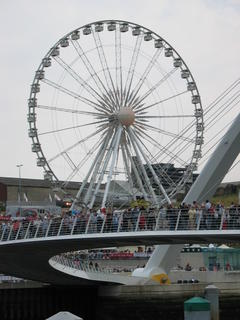
The colourful-looking wooden ship is a Russian vessel named Shtandart. After it set sail for Norway, the weather was so bad that it had to return to Newcastle-Gateshead.
0004.jpg)
This shows a typical riverside scene, with tall ships berthed for as far as the eye could see. Visitors were two or three deep, and it was almost impossible to get alongside the railings to take this photograph.
0006_r1.jpg) The BBC producer with whom I was involved making the Video Nation short film about my daughter, Jemima, spent a day out in the North Sea on board the Trepidacious, which was moored a little way downstream.
The BBC producer with whom I was involved making the Video Nation short film about my daughter, Jemima, spent a day out in the North Sea on board the Trepidacious, which was moored a little way downstream.
I regret that I should have been seasick within minutes of stepping aboard. Very different from my uncle, in Canada, who spent many years in the British navy, and in the mid-1960s emigrated from Britain to Canada on board an ocean liner. I must find out its name.
BBC Video Nation short film
We have just finished making a short film for the BBC Video Nation project. The film, which is online at:
http://www.bbc.co.uk/tyne/videonation/stories/jemima.shtml
is a peep-hole through which to glimpse some aspects of my daughter's life. The film was edited by Andrew Jeffrey, a producer at the BBC in Newcastle. Andrew also offered guidance, gave encouragement, shot some of the film at Jemima's school, provided a stock photograph of Alan Shearer, obtained relevant permissions, and wrote the online text. He was a pleasure.
I have, until now, resisted all requests to allow online images of Jemima, for fear that such images may be used by unscrupulous people for dishonourable purposes. I gave much thought to the video images that were to be used in the short film. This has set me thinking about how to portray other aspects of her life and experience. I feel enthusiastic to make a longer film.
http://www.bbc.co.uk/tyne/videonation/stories/jemima.shtml
is a peep-hole through which to glimpse some aspects of my daughter's life. The film was edited by Andrew Jeffrey, a producer at the BBC in Newcastle. Andrew also offered guidance, gave encouragement, shot some of the film at Jemima's school, provided a stock photograph of Alan Shearer, obtained relevant permissions, and wrote the online text. He was a pleasure.
I have, until now, resisted all requests to allow online images of Jemima, for fear that such images may be used by unscrupulous people for dishonourable purposes. I gave much thought to the video images that were to be used in the short film. This has set me thinking about how to portray other aspects of her life and experience. I feel enthusiastic to make a longer film.
20 May 2005
About my father and his death
My father, John, was born on 2 January 1936. Fascism was in its ascendancy in continental Europe. His father, Jim, was in the British army, and lived in Marylebone, central London, UK. Rene had lived with her family in Harrow, north west London. Jim and Rene moved into a flat in Marylebone, and before Jim left the UK in 1939 to fight for his country, they had a second son, my uncle. However, Jim was already married with two daughters. When he returned to the UK, after the war, Jim returned to his wife and daughters.
I wonder what it was like on that doubtless cold, probably miserable, January day, seventy years ago. How frightening it must have been for Rene to give birth to her first child having little certainty about how the baby was to be supported.
***
Aged 48 years, my father had his first heart attack in January 1984. It very nearly killed him. A year or two before he had bought a small, unexceptional terraced house, in which he was now living, in Enfield, north London, UK. He had recently started in a new, though somewhat menial, office job in nearby Palmer's Green. He remarried in spring 1983, at a civil ceremony in Liskeard, Cornwall, UK, at which I was a witness. Anne Stevenson wrote them a wedding poem that was subsequently published in The Times. Their first, her second, his third, daughter was born in December 1983. That first heart attack was also the start of his life.
My father's final, fatal heart attack struck some eight years later, when he was aged 56. He was now living in an attractive, stone-built cottage that he and his wife had bought and renovated on the edge of Bodmin Moor in Cornwall. He was working as a counsellor and counselling trainer; he was reading and writing a lot; he was able to spend time walking on Bodmin Moor, time learning about the local history and natural history of eastern Cornwall, time on his small-holding, time raising his daughter. During those eight years, he lived more, and more richly, in ways that were meaningful to him, than he had been able to live in the preceding 48 years. He had become interested and interesting, someone who had something to say, someone I could relate to. On the one hand it seems to me desperately sad that six sevenths of his life were dirt-poor, unfulfilling or deeply unhappy, and often all three. On the other hand I am thankful that he was able eventually to find happiness, and also that it was the final stage of his life that was the most enjoyable, fulfilling and personally rewarding for him.
He died on a Monday morning. His death was sudden and unexpected. Whilst his health since the first heart attack had required management, the triple-bypass operation had been successful. He had an ischaemic heart attack in 1991, and was subsequently subjected to hospital tests ("testing to destruction" he called it - I wonder if he was, in fact, correct). However, to all appearances, he could have lived a further ten years.
I was teaching at the time, and received a telephone call informing me of his death. For some reason I was not surprised. My co-tutor assumed responsibility for the class as I prepared to leave. I drove home, packed a few things, and set off for Cornwall: 400 miles, door-to-door. Several abiding images: sitting alone in a motorway service station drinking a mug of coffee, thinking about the bleak telephone call that told me of his first heart attack eight years before; an empty neon-lit motorway at midnight swooping down into Bristol; the narrow country lanes of eastern Cornwall, always so full of primroses and promise, now devoid of meaning, their sole and barren purpose to lead me to my father's dead body. It was something after two in the morning when I arrived.
I spent time with him, alone, reflecting on my experience of his life, my experience of my life with him, this experience of sitting in a room with the dead body of my father, this experience of sitting in a room with a dead body. His body had been laid on the bed, a loving, if practical, gesture, about which there was something calming, and amplified by the apparent peacefulness of his repose. I should have found it disturbing had his body shown indications of pain. I never doubted that he was dead, even though I expected to. His body looked lifeless, in the same way that the engine of a car recovered from having been swept out to sea is far beyond any hope of repair. His body appeared separated from life, like a spacewalking astronaut whose umbilical was accidentally, catastrophically, severed. I could see that my father was now beyond my reach, further receding as each moment passed. Although I debated the issue this way and that, I had no desire to touch his body for I was clear that I wished that my last and lasting memory of his physical presence should not be one that was cold and alien, but instead was visually warm and homely. Not everyone is offered my advantage of choice, and I remain sure, and thankful, that I made the right decision for me, about him, at that time.
We held a public funeral for him in Bodmin one morning the following week, playing tapes of music meaningful to him, such as from Mahler's Das Lied von der Erde. A huge number of people were in attendance, almost all from his life since his move to Cornwall after his first heart attack. In the afternoon we held a more intimate gathering in the tea rooms at Lanhydroc. His body had been cremated, and we scattered his ashes in places that had become important to him: up on the moors, and in the local woods and rivers. Each event involved acknowledging and accepting the reality of his death and embracing the pain of loss. I realise now that inevitable tectonic movement was taking place in the dynamics of family relationships, for since his life had restarted my father had become the hub connecting people. Without him the old model would no longer function. I was also at a watershed in my comprehension of him as a person: no longer able to check things out with him, no longer able to interact with him, in the main all that I shall ever understand about him is already within me. I have spent the past twelve years slowly getting to know what kind of a person he was and what kind of a life he led, both before and after that first heart attack.
Now that I am entering that same age-window, I cannot help but be aware that the ages at which he had his various heart attacks seem so young, premature, and frighteningly close-to-hand.
I wonder what it was like on that doubtless cold, probably miserable, January day, seventy years ago. How frightening it must have been for Rene to give birth to her first child having little certainty about how the baby was to be supported.
***
Aged 48 years, my father had his first heart attack in January 1984. It very nearly killed him. A year or two before he had bought a small, unexceptional terraced house, in which he was now living, in Enfield, north London, UK. He had recently started in a new, though somewhat menial, office job in nearby Palmer's Green. He remarried in spring 1983, at a civil ceremony in Liskeard, Cornwall, UK, at which I was a witness. Anne Stevenson wrote them a wedding poem that was subsequently published in The Times. Their first, her second, his third, daughter was born in December 1983. That first heart attack was also the start of his life.
My father's final, fatal heart attack struck some eight years later, when he was aged 56. He was now living in an attractive, stone-built cottage that he and his wife had bought and renovated on the edge of Bodmin Moor in Cornwall. He was working as a counsellor and counselling trainer; he was reading and writing a lot; he was able to spend time walking on Bodmin Moor, time learning about the local history and natural history of eastern Cornwall, time on his small-holding, time raising his daughter. During those eight years, he lived more, and more richly, in ways that were meaningful to him, than he had been able to live in the preceding 48 years. He had become interested and interesting, someone who had something to say, someone I could relate to. On the one hand it seems to me desperately sad that six sevenths of his life were dirt-poor, unfulfilling or deeply unhappy, and often all three. On the other hand I am thankful that he was able eventually to find happiness, and also that it was the final stage of his life that was the most enjoyable, fulfilling and personally rewarding for him.
He died on a Monday morning. His death was sudden and unexpected. Whilst his health since the first heart attack had required management, the triple-bypass operation had been successful. He had an ischaemic heart attack in 1991, and was subsequently subjected to hospital tests ("testing to destruction" he called it - I wonder if he was, in fact, correct). However, to all appearances, he could have lived a further ten years.
I was teaching at the time, and received a telephone call informing me of his death. For some reason I was not surprised. My co-tutor assumed responsibility for the class as I prepared to leave. I drove home, packed a few things, and set off for Cornwall: 400 miles, door-to-door. Several abiding images: sitting alone in a motorway service station drinking a mug of coffee, thinking about the bleak telephone call that told me of his first heart attack eight years before; an empty neon-lit motorway at midnight swooping down into Bristol; the narrow country lanes of eastern Cornwall, always so full of primroses and promise, now devoid of meaning, their sole and barren purpose to lead me to my father's dead body. It was something after two in the morning when I arrived.
I spent time with him, alone, reflecting on my experience of his life, my experience of my life with him, this experience of sitting in a room with the dead body of my father, this experience of sitting in a room with a dead body. His body had been laid on the bed, a loving, if practical, gesture, about which there was something calming, and amplified by the apparent peacefulness of his repose. I should have found it disturbing had his body shown indications of pain. I never doubted that he was dead, even though I expected to. His body looked lifeless, in the same way that the engine of a car recovered from having been swept out to sea is far beyond any hope of repair. His body appeared separated from life, like a spacewalking astronaut whose umbilical was accidentally, catastrophically, severed. I could see that my father was now beyond my reach, further receding as each moment passed. Although I debated the issue this way and that, I had no desire to touch his body for I was clear that I wished that my last and lasting memory of his physical presence should not be one that was cold and alien, but instead was visually warm and homely. Not everyone is offered my advantage of choice, and I remain sure, and thankful, that I made the right decision for me, about him, at that time.
We held a public funeral for him in Bodmin one morning the following week, playing tapes of music meaningful to him, such as from Mahler's Das Lied von der Erde. A huge number of people were in attendance, almost all from his life since his move to Cornwall after his first heart attack. In the afternoon we held a more intimate gathering in the tea rooms at Lanhydroc. His body had been cremated, and we scattered his ashes in places that had become important to him: up on the moors, and in the local woods and rivers. Each event involved acknowledging and accepting the reality of his death and embracing the pain of loss. I realise now that inevitable tectonic movement was taking place in the dynamics of family relationships, for since his life had restarted my father had become the hub connecting people. Without him the old model would no longer function. I was also at a watershed in my comprehension of him as a person: no longer able to check things out with him, no longer able to interact with him, in the main all that I shall ever understand about him is already within me. I have spent the past twelve years slowly getting to know what kind of a person he was and what kind of a life he led, both before and after that first heart attack.
Now that I am entering that same age-window, I cannot help but be aware that the ages at which he had his various heart attacks seem so young, premature, and frighteningly close-to-hand.
10 May 2005
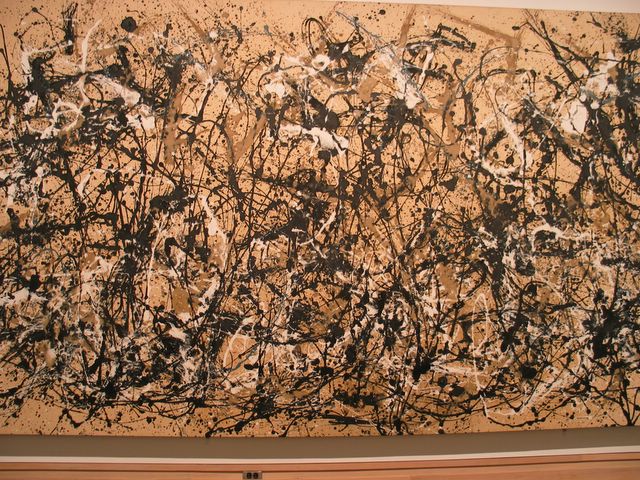

08 May 2005
Modern icons (1)
I intend to use this posting as a precursor to a longer and more detailed webpage. To accompany this post I intend to upload some photographs of modern icons.
In a computer-related context, the term icon has largely come to mean a cartoon-like picture. In a classical sense, it seems to me, that an icon is both a shorthand for something, and also a memory prompt for a category of experiences. I guess that classical icons work on both a publicly shared and a private level.
The Eiffel Tower in Paris and the Statue of Liberty in New York City are equally iconic, albeit regarding slightly different sets of experiences. Both are monuments that have come to symbolise both their location and some important aspect of social identity. The Eiffel Tower stands proudly for French engineering prowess and for the energy of nineteenth century France. It is a national symbol that was captured by a military enemy, and now represents the liberation of Paris from Nazi domination. It has become a symbolic mannequin to be clothed in the current Parisian and French national celebrations. The Statue of Liberty stands proudly for New York City as a tourist destination (contrast this with the New York City of Midnight Cowboy, and Bringing out the Dead); for new opportunities in a new world (see the opening credits of the Mike Nichols movie Working Girl); freedom from the oppression of racist and fascist Europe; a symbol of the US to be protected from terrorist attack.
The clock tower (housing Big Ben) in the Palace of Westminster represents London (as a tourist destination and cultural capital), the UK government (both as a seat of democracy, and as a repository of power with colonial resonances and domination over provincial UK), Britain as a tourist destination. Interestingly, Nelson's Column, in Trafalgar Square, carries a similar iconic load, but familiarity with it declines rapidly outside the south east of England. In contrast, the Millennium Wheel (London Eye) on the south bank of the River Thames in London is gradually achieving iconic status, and its recreational nature may carry the weight of tourist meaning more easily than 'Big Ben'.
[Addendum] Some weeks after first posting this, I came across a short article on the BBC News website about the status of the Millennium Wheel. The article (The history of the London Eye by Alexis Akwagyiram) goes at least some way to concurring with some of my thoughts expressed here.
Standing in the heart of the city, the Brandenburg Gate is an icon of Berlin. To a lesser extent it is also an icon of the German people, although this honour is shared with the Reichstag. Standing between the former East Berlin and West Berlin, the gate also points to the former existence of socialist East Germany, and to the contrasting vibrancy of the capitalist enclave of West Berlin, and to the Iron Curtain. The Brandenburg Gate has come to represent a German nation unified, and freed from communist occupation. However, whilst I am willing to extend that sense of liberation from communist occupation to occupation by the Nazi regime, I am unsure about the extent to which the gate was used as a national icon by the Nazis. In contrast, there is no ambiguity about the Eiffel Tower in Paris: Nazi occupation followed by French liberation.
The desert pyramids are an icon of Egypt. Images of the pyramids are used to encourage tourism by pointing to past Egyptian civilisation and historical culture. Contemporary Egypt is impoverished, resulting in some unpleasant political undercurrents that have made tourists into targets.
I wonder how iconic The Angel of the North has become. It is a massive sculpture by the British sculptor Anthony Gormley, and stands on high ground at the southern edge of Gateshead, Tyne and Wear, overlooking the A1 (the road that links London to Edinburgh). Some people from the North East England have taken it to heart, and for them it has come to stand for their identity as Geordies. However, for many people in the North East, it is far too modern, and far too high cultured. Moreover, its 'Tyneside' location is taken as exclusive by many people of Wearside (Makkems) and Teesside.
In a computer-related context, the term icon has largely come to mean a cartoon-like picture. In a classical sense, it seems to me, that an icon is both a shorthand for something, and also a memory prompt for a category of experiences. I guess that classical icons work on both a publicly shared and a private level.
The Eiffel Tower in Paris and the Statue of Liberty in New York City are equally iconic, albeit regarding slightly different sets of experiences. Both are monuments that have come to symbolise both their location and some important aspect of social identity. The Eiffel Tower stands proudly for French engineering prowess and for the energy of nineteenth century France. It is a national symbol that was captured by a military enemy, and now represents the liberation of Paris from Nazi domination. It has become a symbolic mannequin to be clothed in the current Parisian and French national celebrations. The Statue of Liberty stands proudly for New York City as a tourist destination (contrast this with the New York City of Midnight Cowboy, and Bringing out the Dead); for new opportunities in a new world (see the opening credits of the Mike Nichols movie Working Girl); freedom from the oppression of racist and fascist Europe; a symbol of the US to be protected from terrorist attack.
The clock tower (housing Big Ben) in the Palace of Westminster represents London (as a tourist destination and cultural capital), the UK government (both as a seat of democracy, and as a repository of power with colonial resonances and domination over provincial UK), Britain as a tourist destination. Interestingly, Nelson's Column, in Trafalgar Square, carries a similar iconic load, but familiarity with it declines rapidly outside the south east of England. In contrast, the Millennium Wheel (London Eye) on the south bank of the River Thames in London is gradually achieving iconic status, and its recreational nature may carry the weight of tourist meaning more easily than 'Big Ben'.
[Addendum] Some weeks after first posting this, I came across a short article on the BBC News website about the status of the Millennium Wheel. The article (The history of the London Eye by Alexis Akwagyiram) goes at least some way to concurring with some of my thoughts expressed here.
Standing in the heart of the city, the Brandenburg Gate is an icon of Berlin. To a lesser extent it is also an icon of the German people, although this honour is shared with the Reichstag. Standing between the former East Berlin and West Berlin, the gate also points to the former existence of socialist East Germany, and to the contrasting vibrancy of the capitalist enclave of West Berlin, and to the Iron Curtain. The Brandenburg Gate has come to represent a German nation unified, and freed from communist occupation. However, whilst I am willing to extend that sense of liberation from communist occupation to occupation by the Nazi regime, I am unsure about the extent to which the gate was used as a national icon by the Nazis. In contrast, there is no ambiguity about the Eiffel Tower in Paris: Nazi occupation followed by French liberation.
The desert pyramids are an icon of Egypt. Images of the pyramids are used to encourage tourism by pointing to past Egyptian civilisation and historical culture. Contemporary Egypt is impoverished, resulting in some unpleasant political undercurrents that have made tourists into targets.
I wonder how iconic The Angel of the North has become. It is a massive sculpture by the British sculptor Anthony Gormley, and stands on high ground at the southern edge of Gateshead, Tyne and Wear, overlooking the A1 (the road that links London to Edinburgh). Some people from the North East England have taken it to heart, and for them it has come to stand for their identity as Geordies. However, for many people in the North East, it is far too modern, and far too high cultured. Moreover, its 'Tyneside' location is taken as exclusive by many people of Wearside (Makkems) and Teesside.
Subscribe to:
Posts (Atom)


0003_r1.jpg)
0007_r1.jpg)